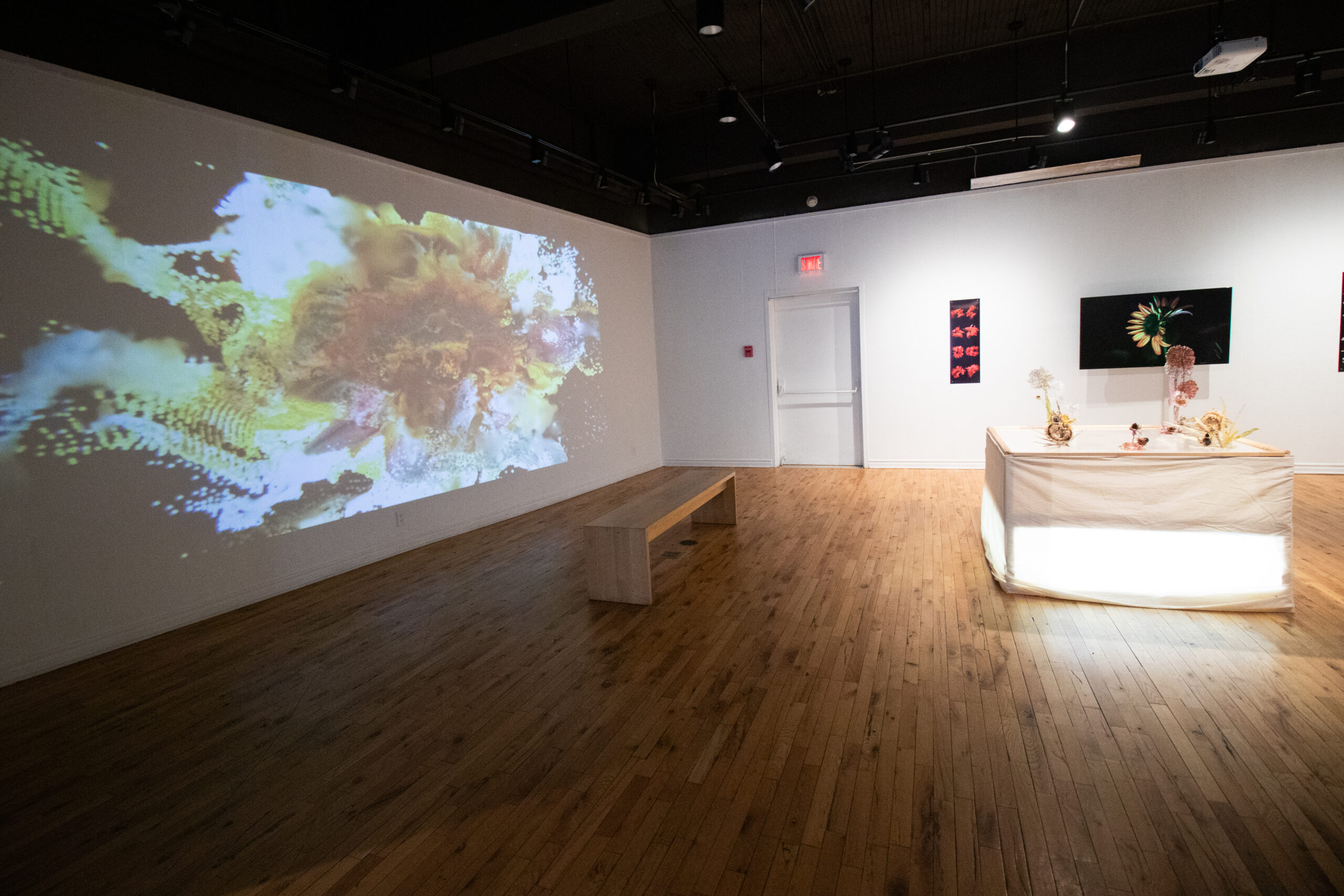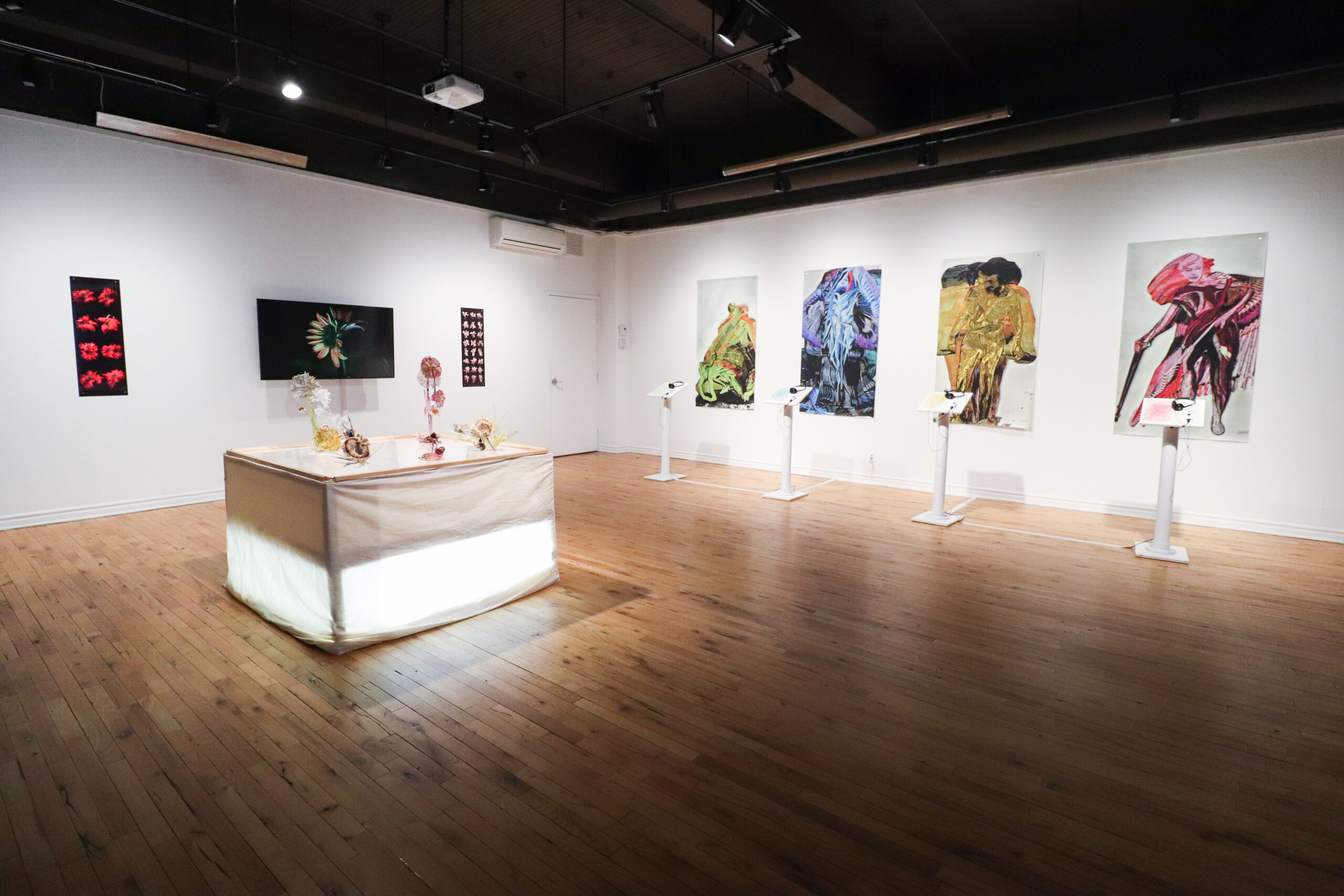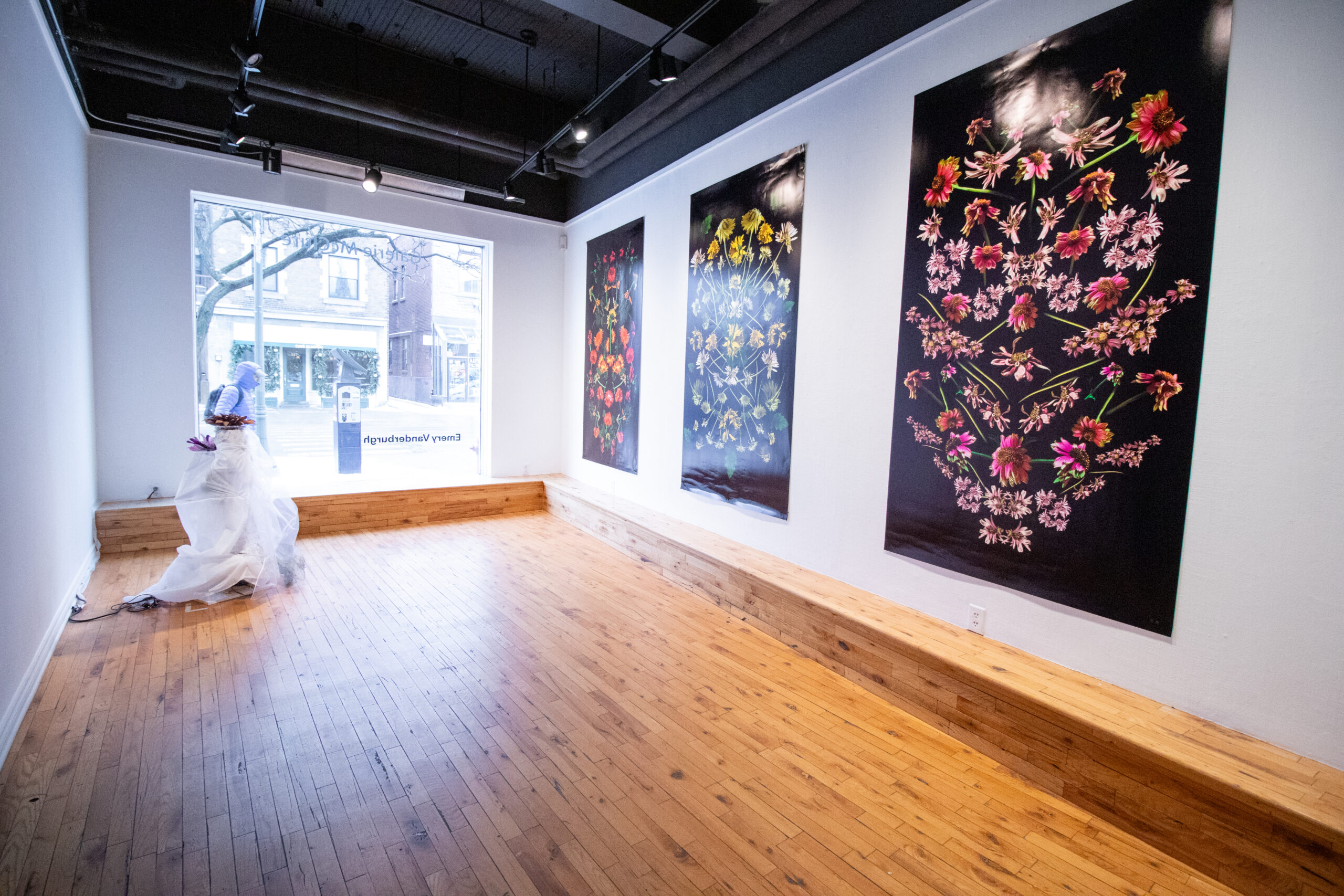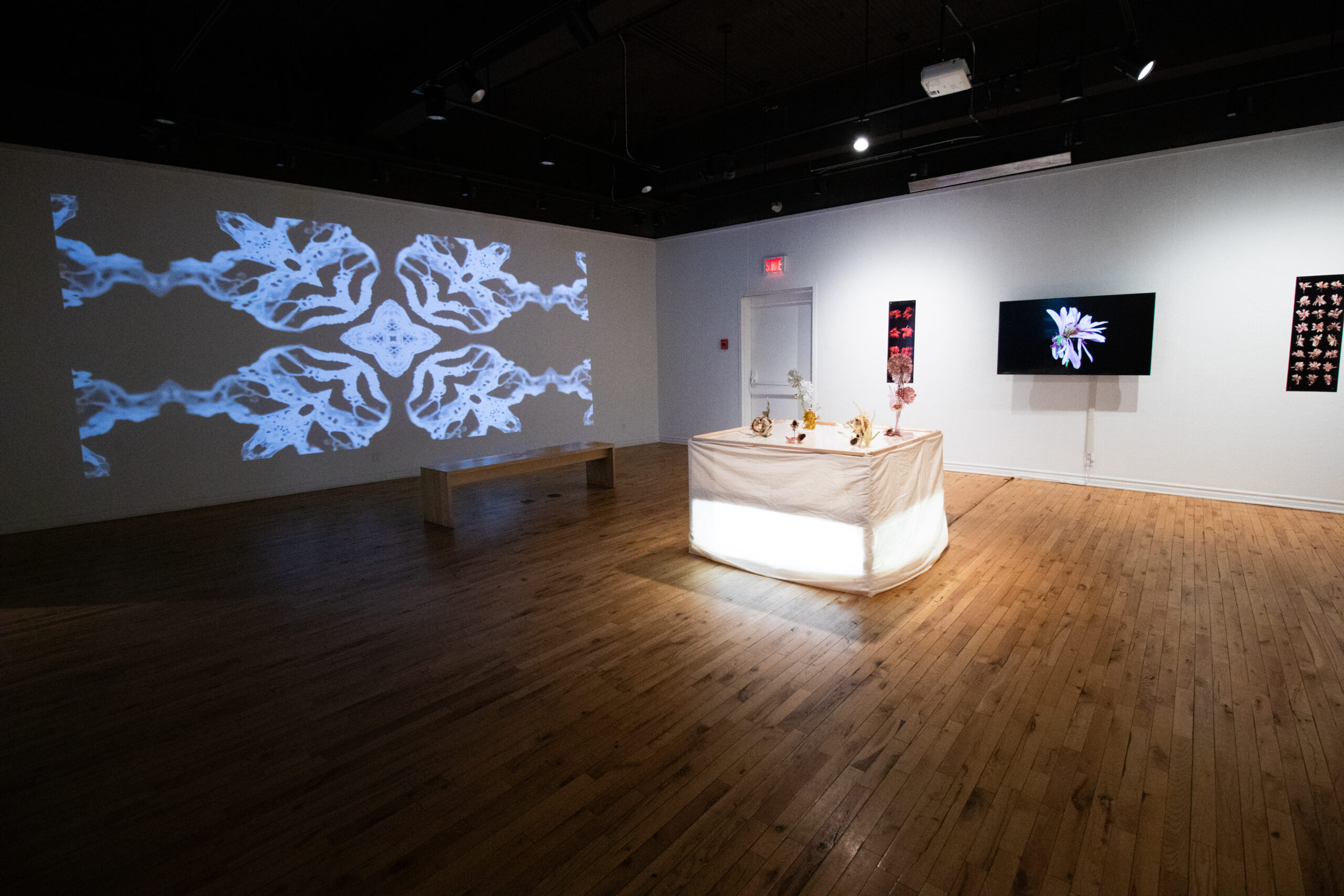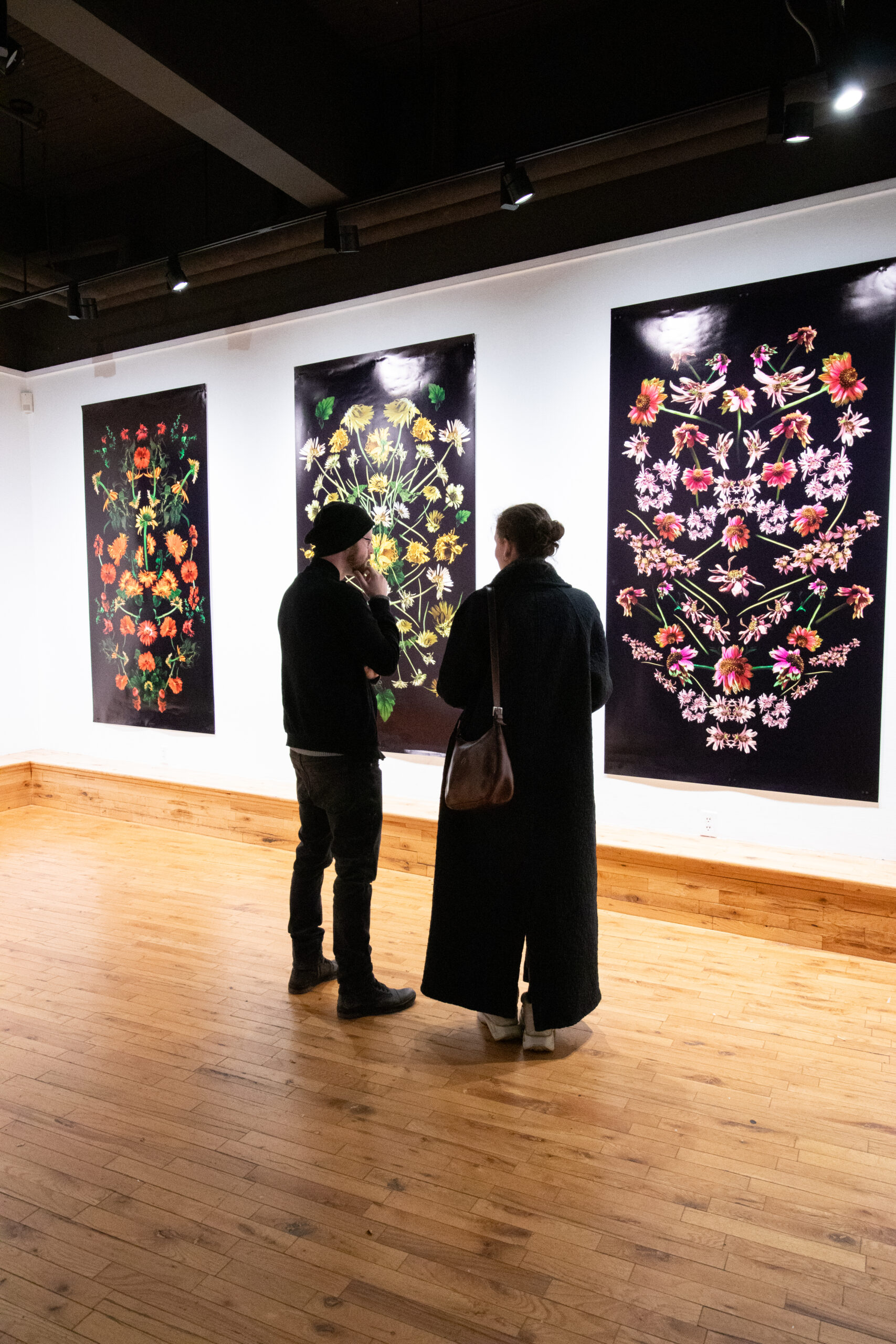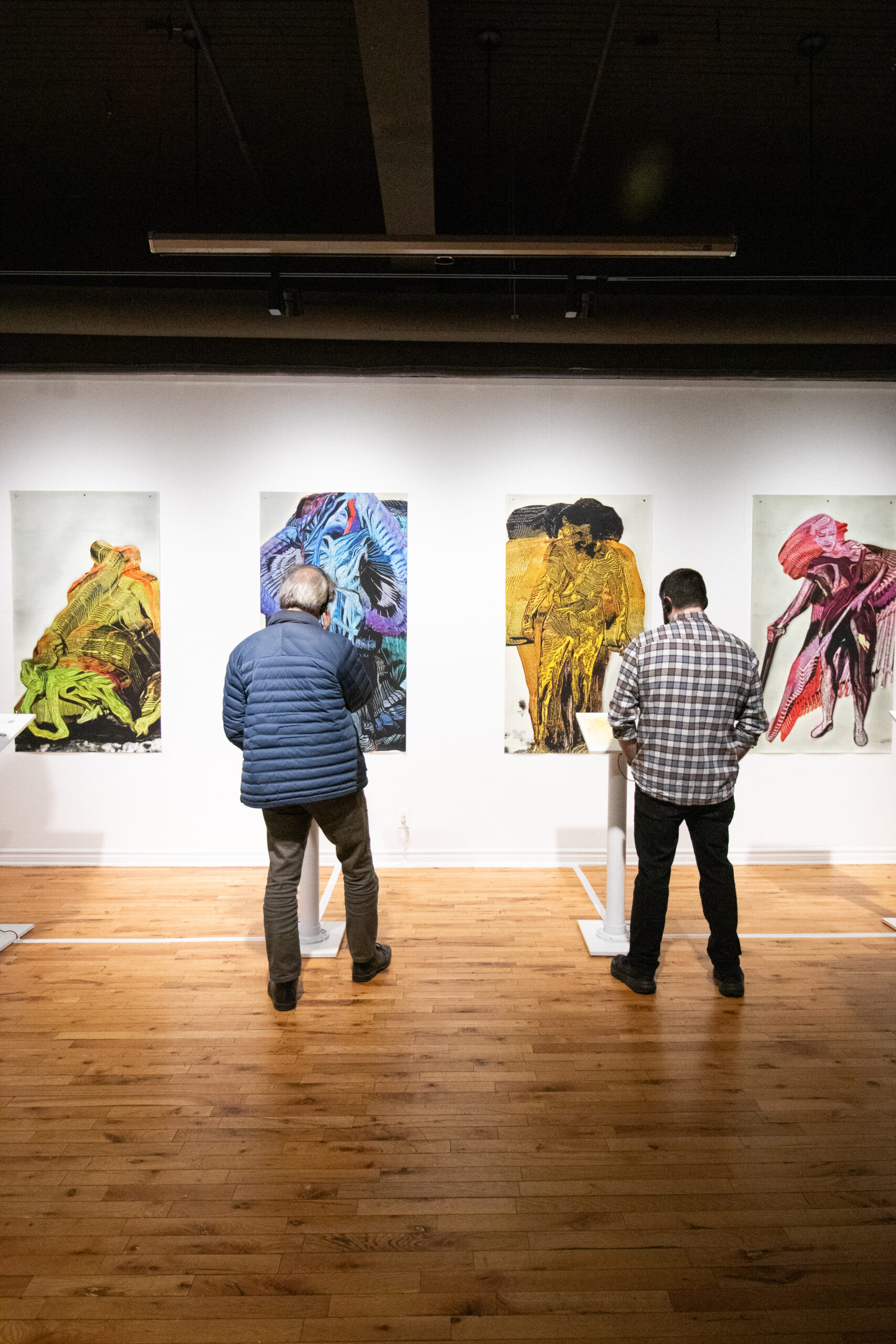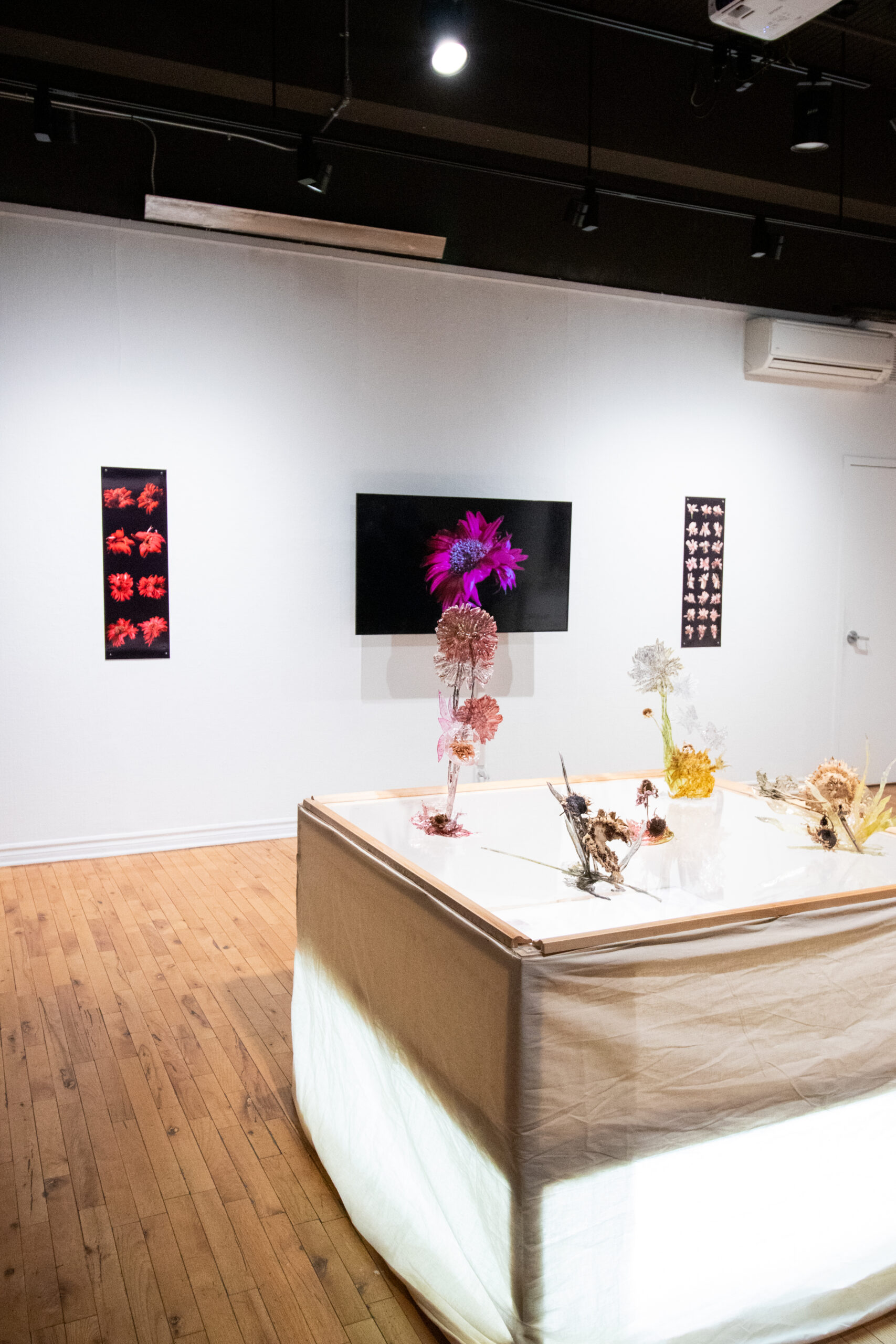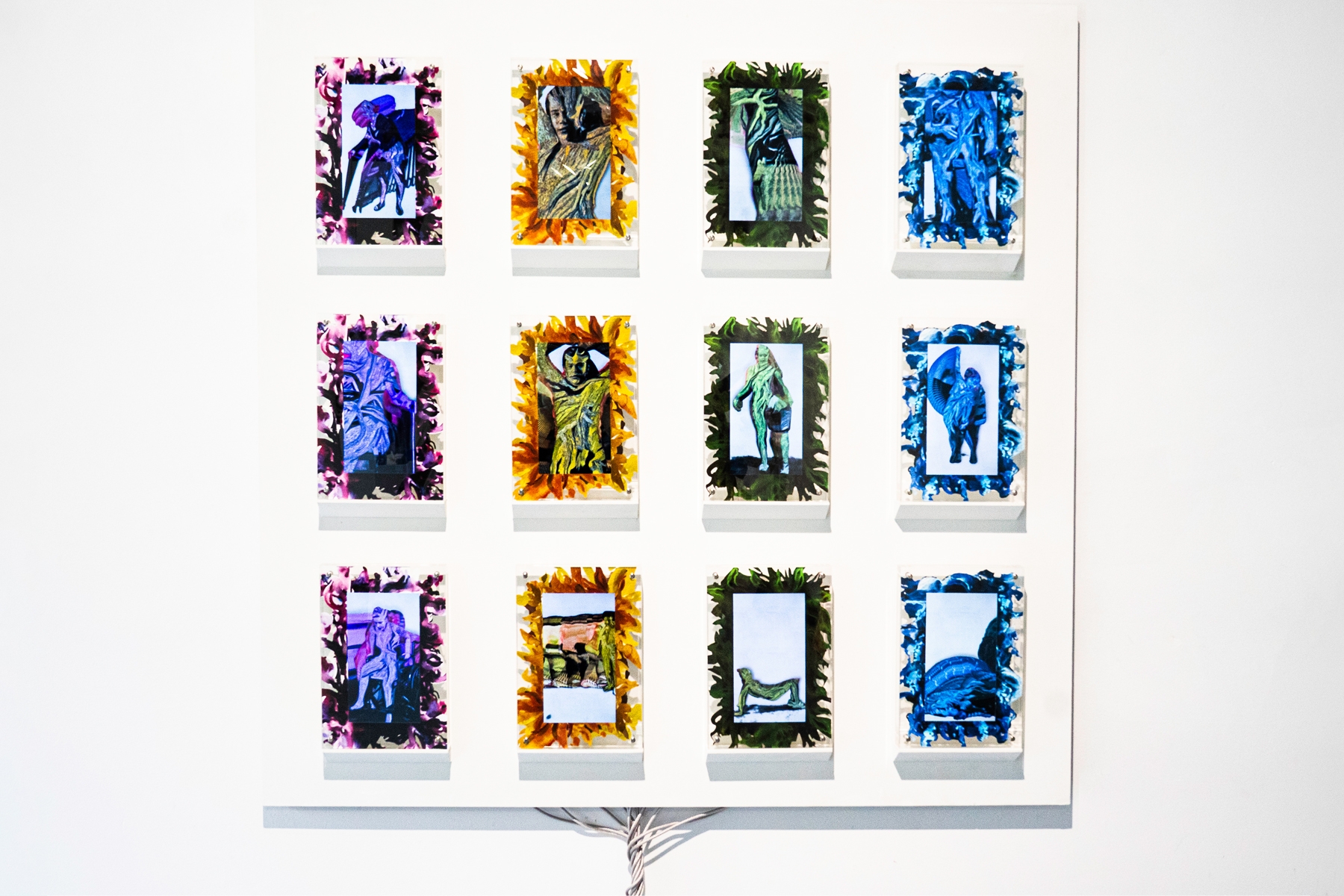
Disabled Habitus is a multimedia exhibition that positions disability as a valuable and essential expression of biodiversity. Created by Emery Vanderburgh, a visibly disabled artist, the works resist narratives that cast disability as tragedy, deficiency, or failure. Instead, they present disabled embodiment as a record of creativity, ingenuity, and survival.
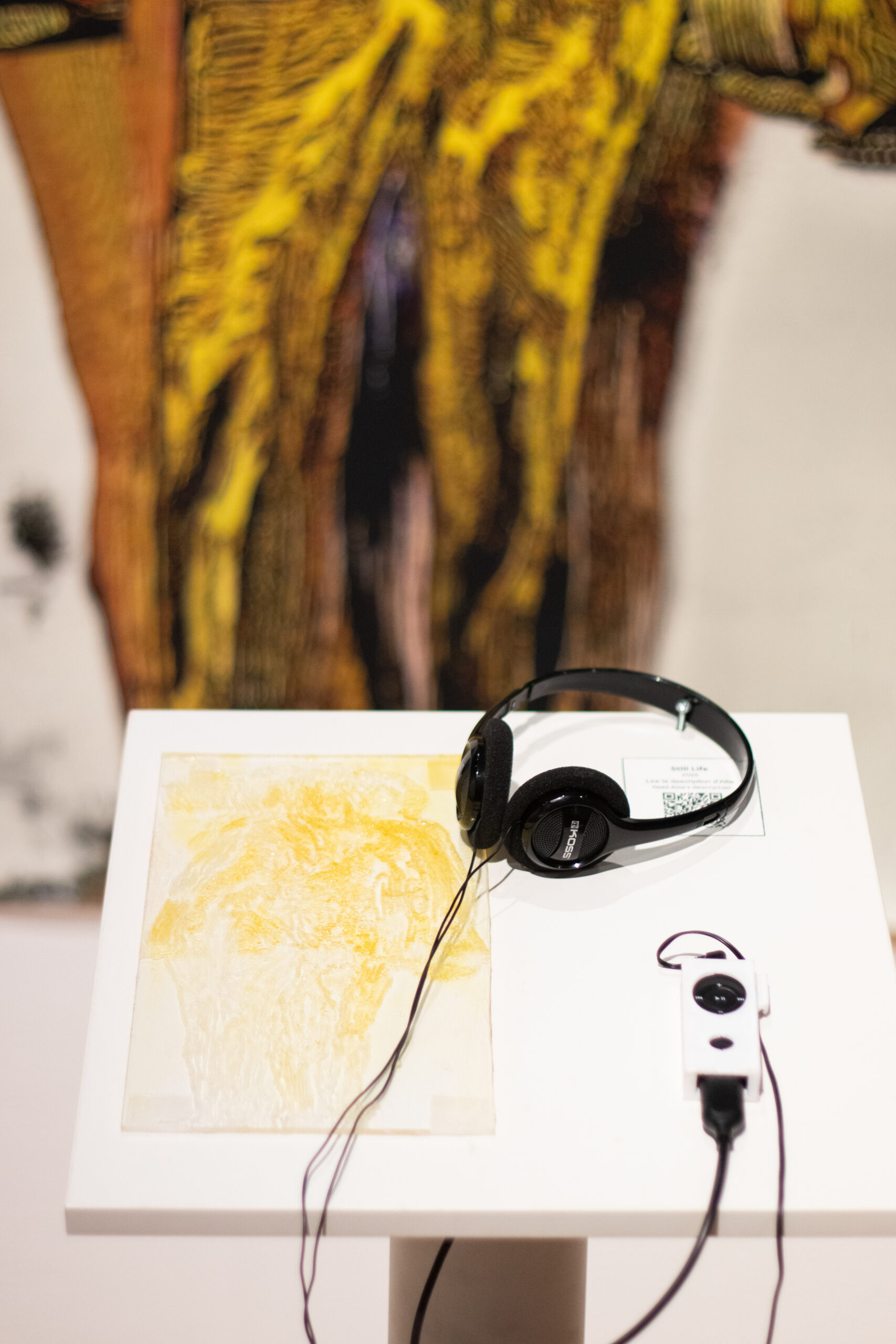
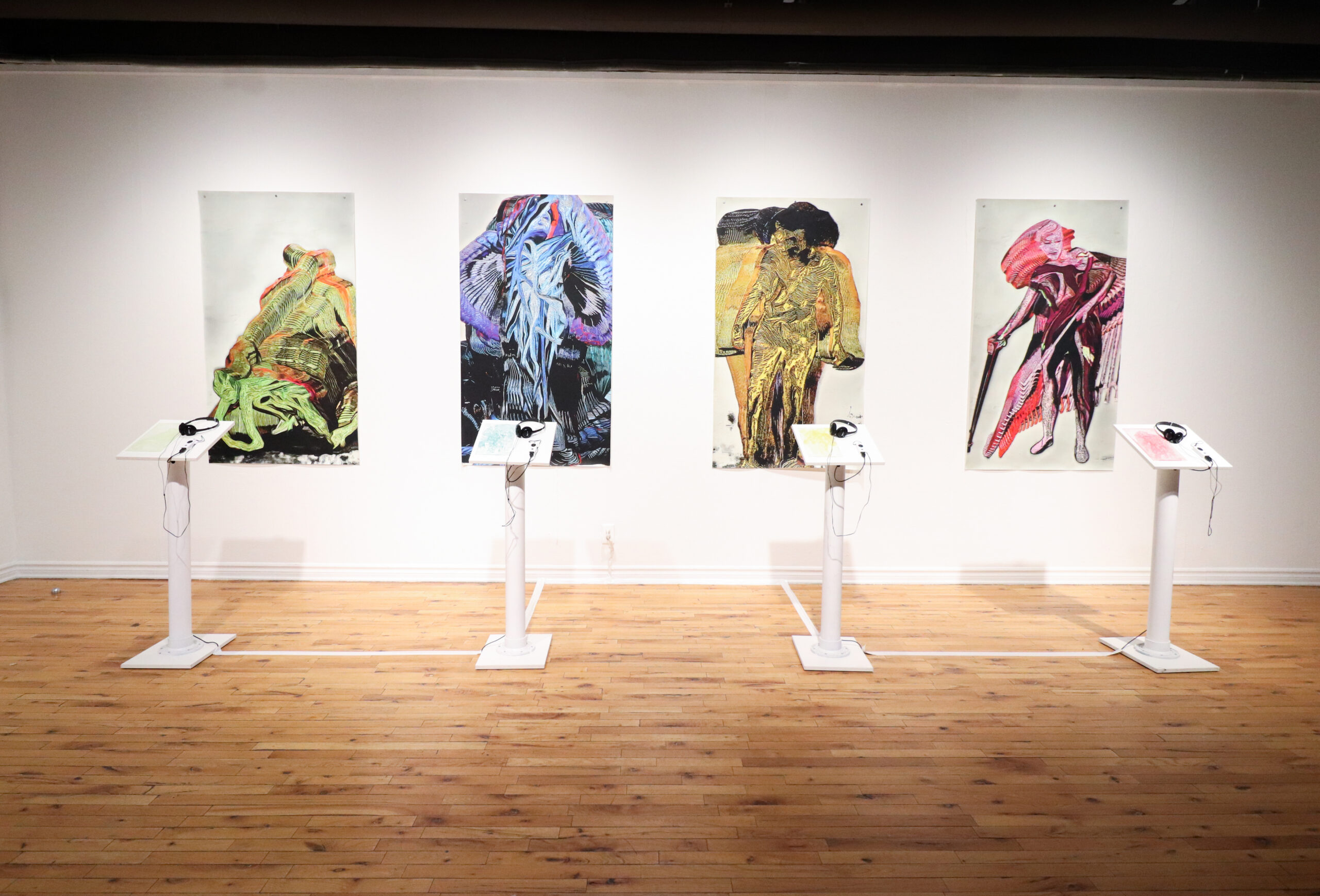
Through reimagined motion studies and representations of disability in the natural world, the exhibition challenges pathologized framings of difference by pointing to the universality and therefore neutrality of “deviation.” Hand-traced choreographies of disabled performers are layered into a looping visual grid, recalling early scientific illustrations and echoing botanical and entomological diagrams. These animations allow disabled movement to take up space—beyond diagnosis, beyond spectacle.
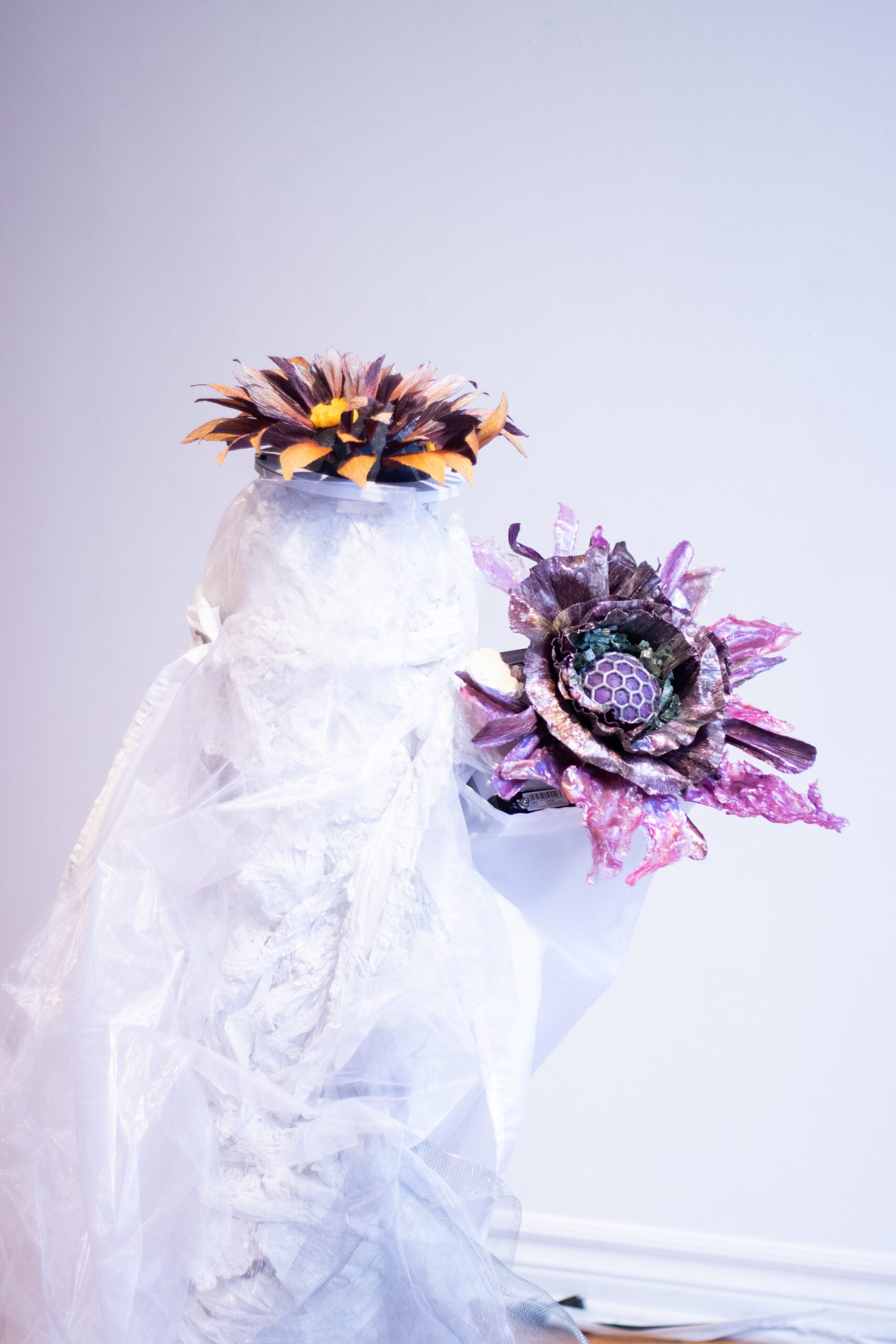
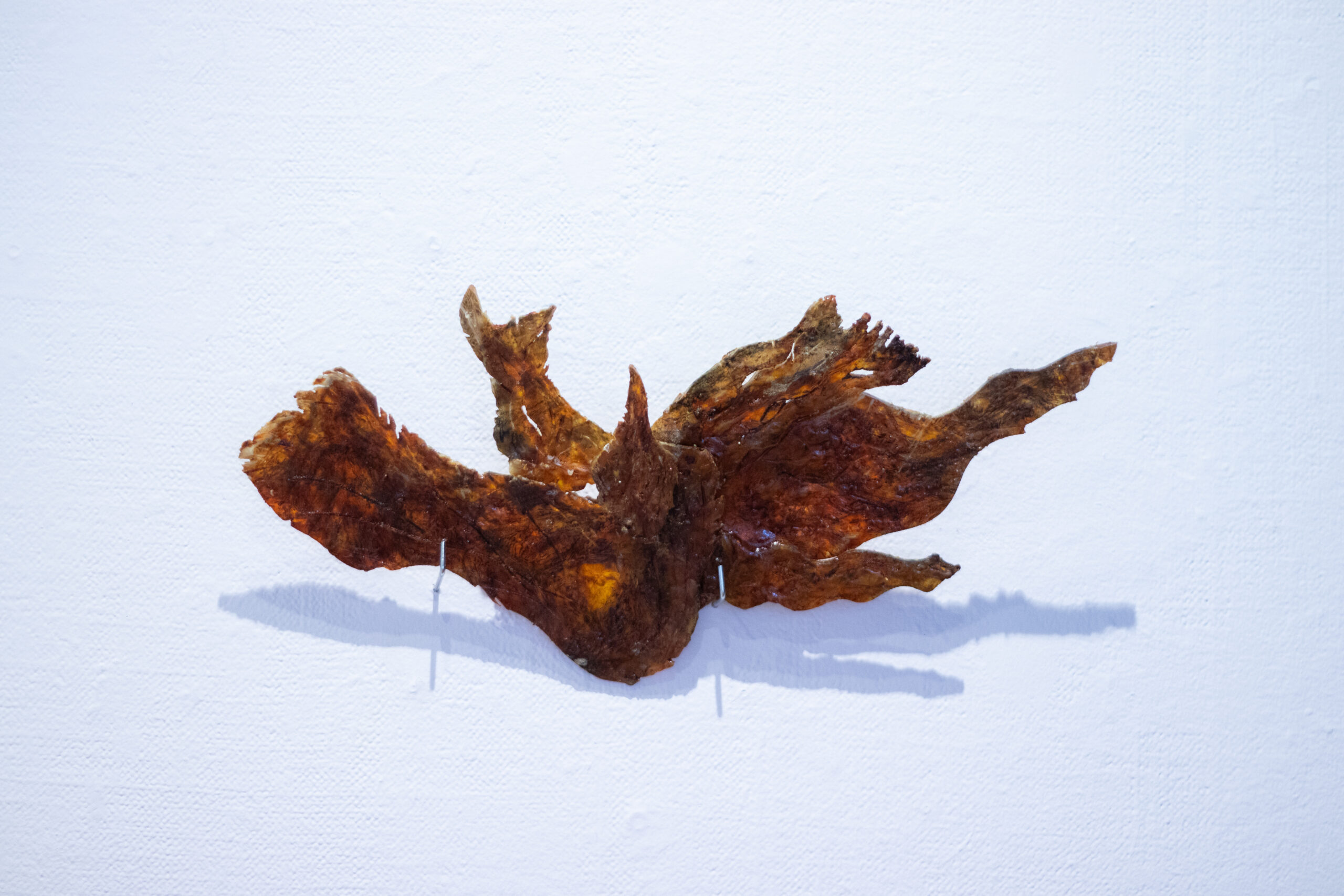
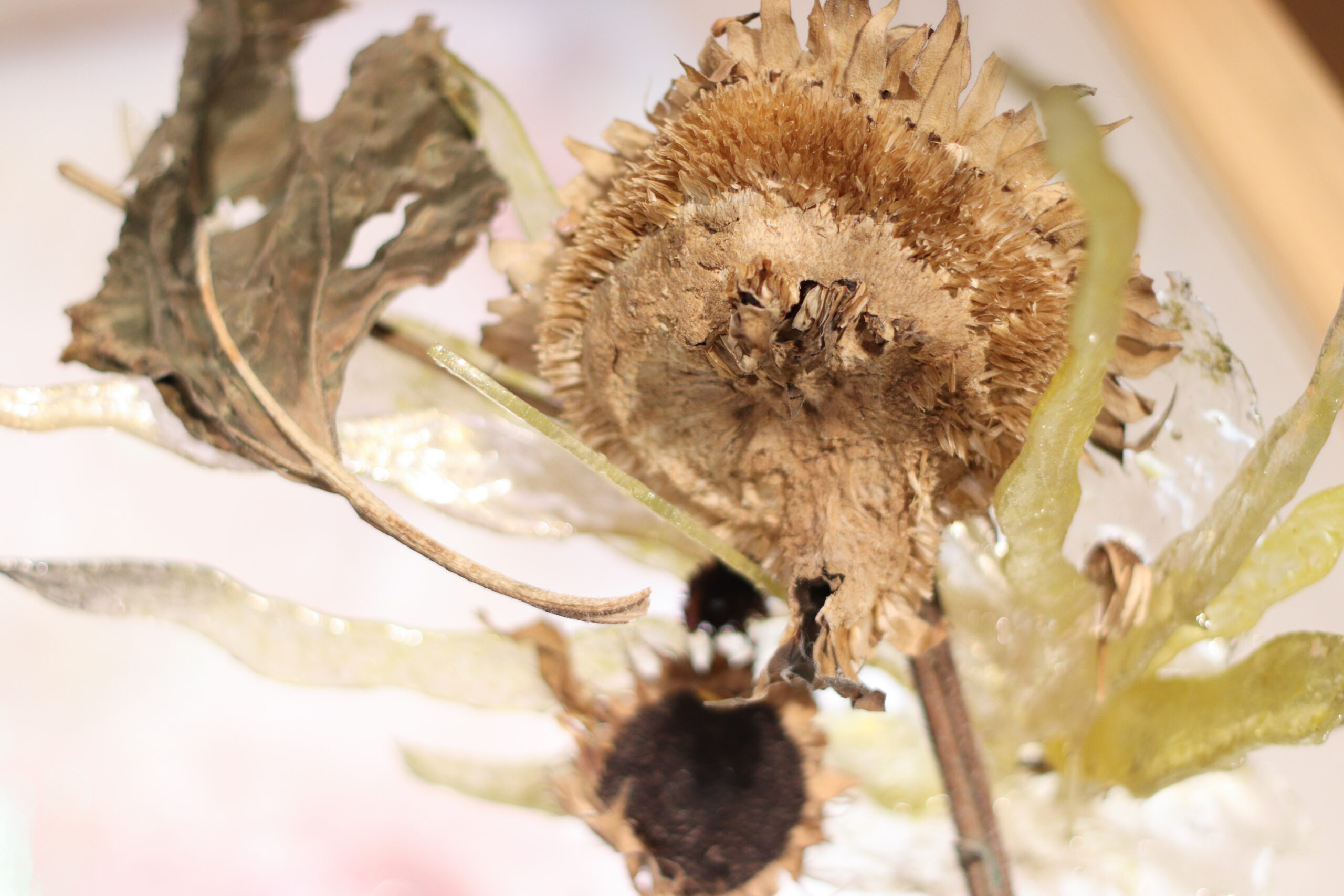
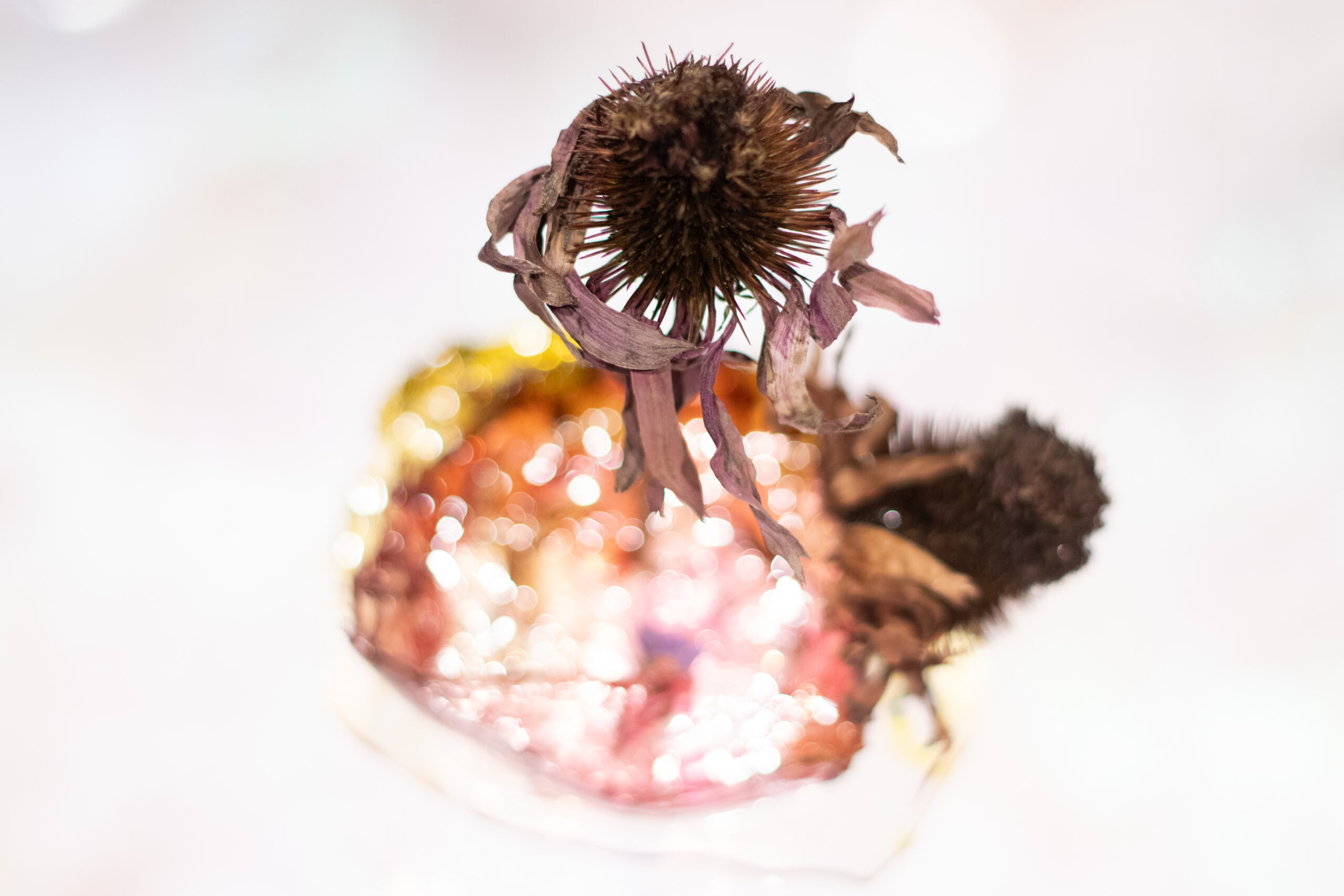
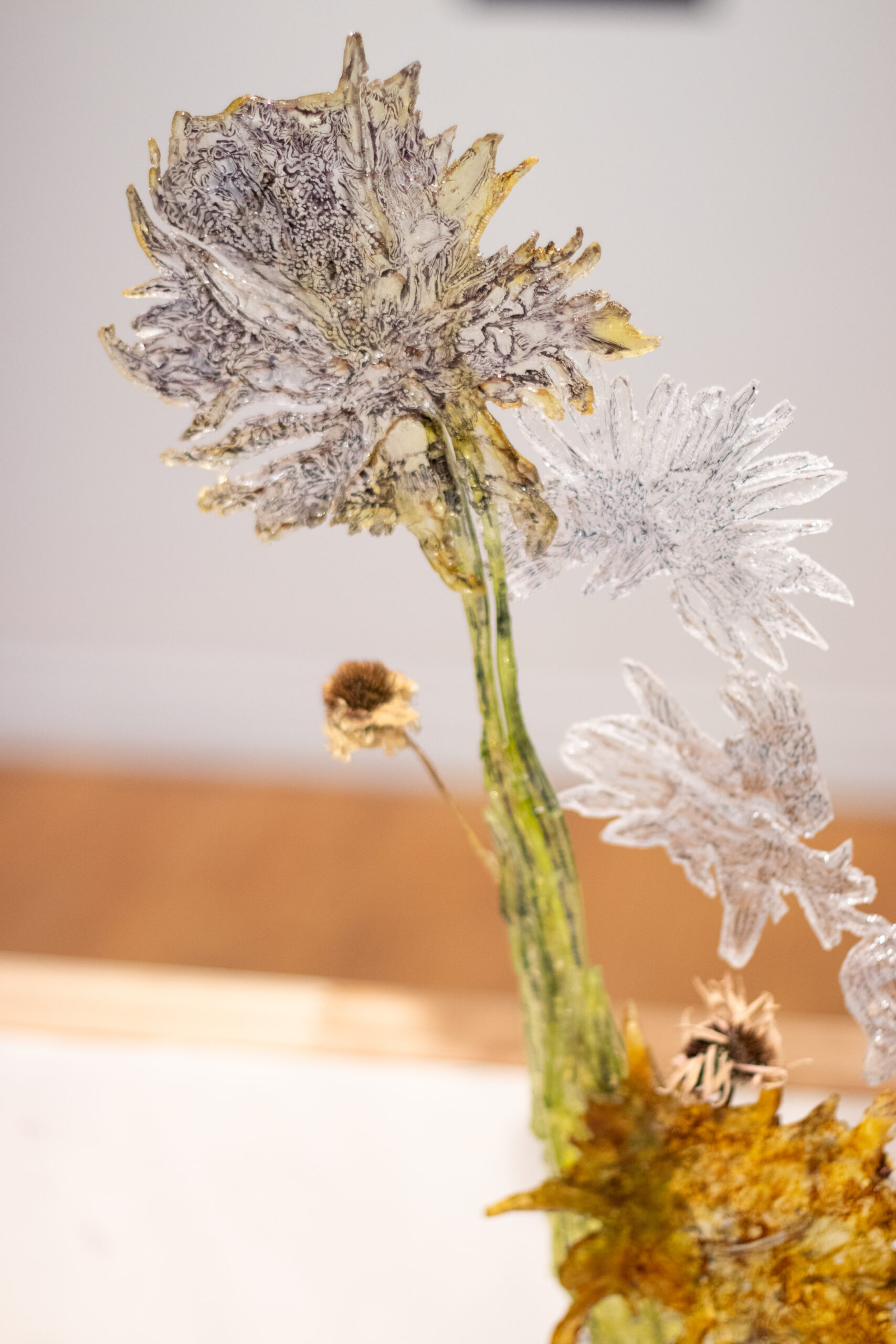
Elsewhere, floral mutations, conjoined petals, crested stems, warped growths—are collected and explored as nonhuman representations of disability. By shifting disability away from a solely human context, the exhibition reveals how systems rooted in white supremacy, colonialism, eugenics, and ableism define which lives are valued and which are expendable. Just as monocultures in agriculture suppress variation, these ideologies favour uniformity, making our ecosystems and societies more fragile.
Both the animated choreographies and mutant blooms are provocations: Why do we meet biological irregularity in plants with wonder, but disabled bodies with discomfort? This space invites you to consider disability not as a diagnosis, but as diversity: a generative force, a critical lens, and a vital part of our ecological survival.
Artist Bio:
Emery Vanderburgh is a visibly disabled artist who experiences the ramifications of a genetic mutation (cancer) and resulting physical disability (AK amputation). She uses animation, 3D modeling, sculpture and film to reveal the intersection of science and pathologization of difference, and to produce nuanced
disability representation. Her work is preoccupied with archive, movement, and iteration as potential means of liberation. Her projects have received support through the Canada Council for the Arts, Montreal Arts Council, SSHRC’s Mobilizing Disability Survival Skills for the Urgencies of the Anthropocene project (PI, Arseli Dokumaci), and the Fonds de Recherche du Quebec. Emery lives and works in Tiohtià:ke/Montreal.
A serial collaborator with researchers and the disabled community, Emery’s current projects span from explorations of the role of epigenetics in mental health to the prospect of infrared imaging in art to the possibilities of mutated flowers for imagining disability as a valuable form of biodiversity. She uses animation, 3D modeling, sculpture and film to explore the intersection of science and experience, to reveal the pathologization of difference, and to produce nuanced disability representation. She uses accessibility in her work to open the art space to new audiences in the name of inclusion, but also to enrich the work for all audiences, and reveal access adaptation as a creative outlet. Emery Vanderburgh is an artist passionate about access and community collaboration.
https://emeryvanderburgh.ca/
The artist thanks the Access in the Making (AIM) Lab at Concordia University, Fonds de recherche du Québec, Conseil des arts de Montréal, and the Social Sciences and Humanities Research Council.
McClure Gallery thanks the Canada Council for the Arts for 2025-26 seasonal funding and the Conseil des arts de Montréal for its ongoing financial support.